
Lifestyle
Strength Training on GLP-1s: A Practical Starting Point
How strength training can fit into a GLP-1 care plan, with adaptable movement ideas and questions to ask your clinician before you start.
By Toned Team · Reviewed by the Toned editorial team
Published November 9, 2026 · Last reviewed October 30, 2026 · 7 min read
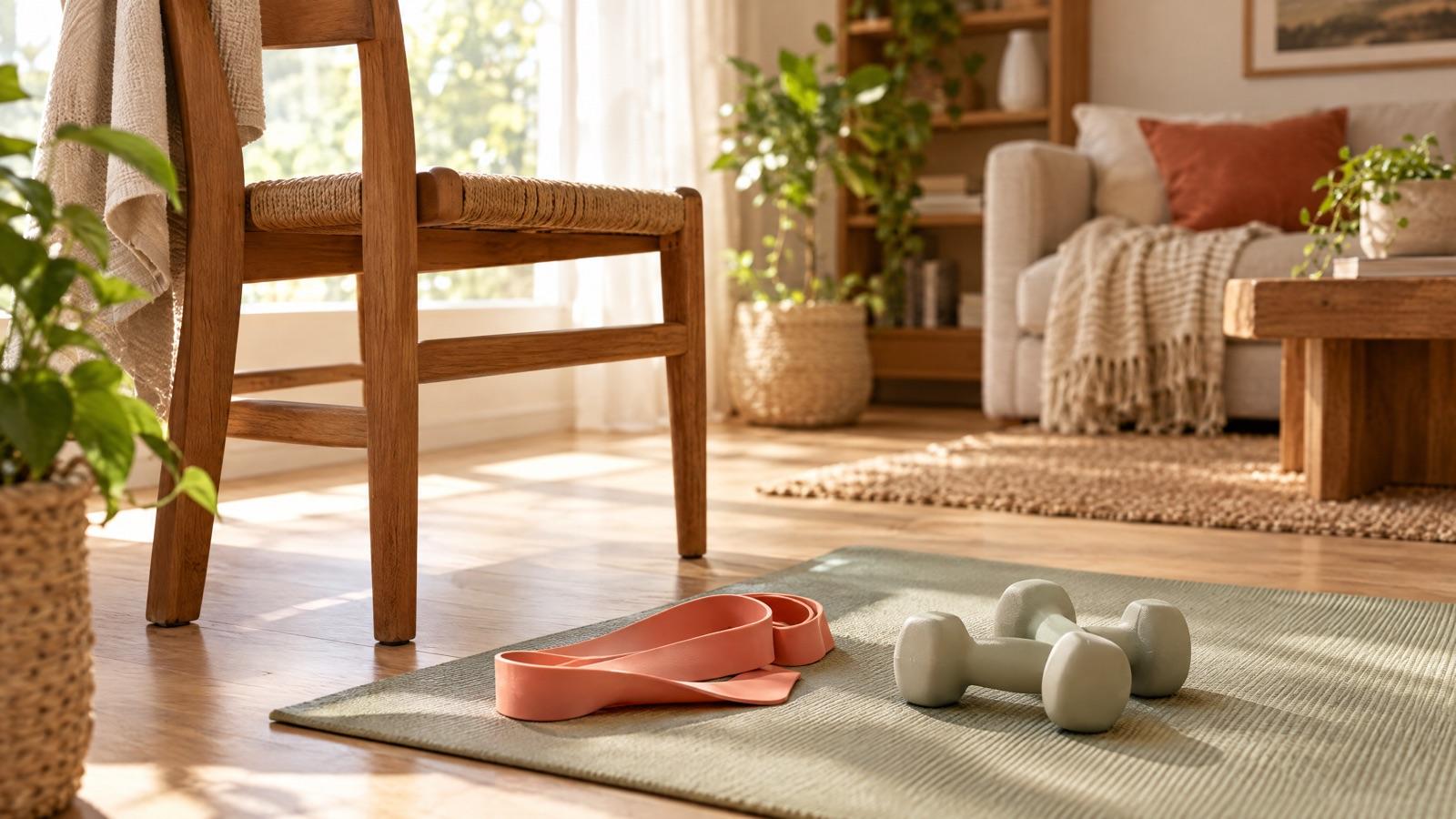
Strength training can be a helpful part of GLP-1 treatment. It supports everyday strength and function, like climbing stairs, carrying groceries, and getting up from a chair.
A 2025 joint nutrition advisory from four obesity and nutrition groups says resistance training, or a mix of resistance and aerobic exercise, is well established to help preserve lean mass during weight reduction. It also says extra protein alone is likely not enough to protect muscle without structured strength training. You do not need a gym to begin. Start where you are, check with your clinician first, and build slowly.
Six beginner movement patterns
- Sit-to-stand
- Wall push
- Band pull
- Hip hinge
- Carrying bags
- Balance near a counter
Why strength and function matter
When people lose weight, they lose some fat and some lean mass. The labels for branded semaglutide and branded tirzepatide say these medicines lower body weight "with greater fat mass loss than lean mass loss" (branded semaglutide prescribing information, branded tirzepatide prescribing information). That is useful context, not a reason to worry.
A quick note on words. "Lean mass" (or lean body mass) is everything that is not fat. It includes muscle, but also water, organs, and bone. So lean mass is a broader measure than skeletal muscle alone. A drop in lean mass on a scan does not mean an equal drop in muscle.
The bigger point is how you feel and move. Strength training can help you feel steadier and more confident in daily tasks, and keep up the activities you enjoy.
The Physical Activity Guidelines for Americans (2nd edition) recommend that adults do muscle-strengthening activities involving all major muscle groups on 2 or more days a week, along with regular aerobic activity. They also say some physical activity is better than none. These are general guidelines for adults, not a plan made for GLP-1 treatment, and not a target you must hit on day one.
Does protein replace resistance training?
No. Protein and strength training work together. The joint advisory says that "increased protein intake alone is likely inadequate" to preserve muscle without structured resistance or strength training. It also says aerobic exercise alone has a smaller effect on lean mass than resistance or mixed training.
For food ideas that fit a smaller appetite, see our article on why protein matters on a GLP-1.
Discuss readiness and limitations first
Before you start or change an exercise routine, talk with your clinician. This matters even more if you:
- Have heart, lung, joint, or back conditions
- Have had dizziness, fainting, or low blood sugar
- Take insulin or a sulfonylurea (these can raise the risk of low blood sugar with GLP-1 medicines)
- Are eating much less than usual, or have had ongoing nausea, vomiting, or diarrhea
- Are recovering from an injury or surgery
The Physical Activity Guidelines say adults with chronic conditions or symptoms should be under the care of a health care provider, and that people who cannot meet the guidelines should be active according to their abilities.
What if I have an injury or mobility limit? You can still build strength in ways that fit your body. Seated, wall-supported, or water-based options may be easier on joints. A physical therapist or qualified exercise professional can help you adapt movements safely.
Examples of movement patterns
You do not need a gym. These are broad categories, not a prescription. Choose versions that feel manageable, and ask a qualified professional if you are unsure about form.
| Movement pattern | Everyday reason | Easier ways to try it | Ways to build over time |
|---|---|---|---|
| Sit-to-stand (squat pattern) | Getting up from a chair or car | Stand up from a sturdy chair, using hands if needed | Lower seat, slower pace, hold a light weight |
| Push | Pushing a door, getting up off the floor | Push-ups against a wall | Counter or bench push-ups |
| Pull | Lifting bags, opening heavy doors | Pull a resistance band toward you while seated | Firmer band, more repetitions |
| Hinge (hip bend) | Picking items up from the floor | Small hip bends with hands on thighs | Hold a light weight, guided by a professional |
| Carry | Groceries, laundry, children | Walk holding light bags | Heavier bags, longer distance |
| Balance and core | Steady walking, fewer stumbles | Stand near a counter, shift weight foot to foot | Stand on one foot with light support |
Do I need a gym? No. Body weight, resistance bands, water bottles, or grocery bags can all work. Some people like a gym for guidance and equipment. Others prefer home or outdoor options. The best routine is one you can keep.
Progress gradually
Start smaller than you think you need to. Your energy may be different on treatment, especially if you are eating less.
A gentle approach to building up:
- Pick two or three movement patterns to start
- Choose an easy version where you could do a few more repetitions at the end
- Rest between sets and between sessions
- Add a little more only when the current level feels steady
- Note how you feel the next day, and scale back if you are very sore or tired
- Keep water nearby
Stop exercising and seek care if you notice:
- Dizziness, lightheadedness, or feeling faint
- Chest pain, pressure, or tightness
- Shortness of breath that does not ease with rest
- A racing or irregular heartbeat
- Shakiness, sweating, or confusion, which may be signs of low blood sugar
If symptoms are severe or do not go away when you stop, call 911 or get emergency care. Tell your clinician about any of these symptoms, even if they pass.
Nutrition, recovery, and check-ins
Strength training works best with steady support from food, fluids, and rest.
- Protein. The joint advisory says enough protein should be a priority, especially combined with a structured strength program. Your clinician or a registered dietitian can help you set a target that fits you.
- Fluids. GLP-1 medicines can cause nausea, vomiting, or diarrhea, which can lead to dehydration. Drink fluids through the day, and tell your clinician if you cannot keep fluids down.
- Timing. Some people feel better exercising a few hours after a meal instead of on a very full or very empty stomach. Notice what works for you.
- Recovery. Sleep and rest days help your body adapt.
For broader eating tips, see what to eat on tirzepatide. If you are thinking about long-term plans, our article on semaglutide maintenance and a guide to tirzepatide maintenance after weight loss can help.
Questions to bring to your next check-in
- Is there any reason I should avoid certain types of exercise right now?
- Do any of my medicines raise my risk of low blood sugar during exercise?
- What protein target makes sense for me?
- Should I see a physical therapist or exercise professional?
- What symptoms should make me stop and call you?
A note about Toned.health treatment
Toned.health offers compounded semaglutide and compounded tirzepatide, prescribed by independently licensed providers when appropriate. The label statements in this article come from the branded semaglutide and tirzepatide products and should not be read as results for compounded products.
Start with one conversation
Ask your clinician what activity is appropriate for your current health and capacity. If you are a Toned.health patient, you can message your provider through your secure patient portal.
If you get treatment through Toned.health
Toned.health offers compounded semaglutide and compounded tirzepatide, prescribed only if an independently licensed provider decides it is appropriate. See how it works for the online visit, refills, and check-ins with your care team.
Compounded medications are not FDA-approved. FDA does not review compounded medications for safety, effectiveness, or quality before marketing.
References
- 2025 joint nutrition advisory. PubMed Central
- Branded semaglutide prescribing information (US). U.S. prescribing information
- Branded tirzepatide prescribing information (US). U.S. prescribing information
- Physical Activity Guidelines for Americans. odphp.health.gov
- Weinheimer EM, Sands LP, Campbell WW. A systematic review of the separate and combined effects of energy restriction and exercise on fat-free mass in middle-aged and older adults. Nutr Rev. 2010. PubMed
- Roth C, Schoenfeld BJ et al. Lean mass sparing in resistance-trained athletes during caloric restriction: the role of resistance training volume. Eur J Appl Physiol. 2022. PubMed
This article is for general education and is not medical advice. Talk to a licensed provider about your individual situation.