
GLP-1 Weight Loss
Traveling With Tirzepatide and Semaglutide
Prepare for travel with a medication checklist covering labels, cooling, supplies, and questions for your clinician and pharmacist.
By Toned Team · Reviewed by the Toned editorial team
Published October 28, 2026 · Last reviewed September 30, 2026 · 7 min read
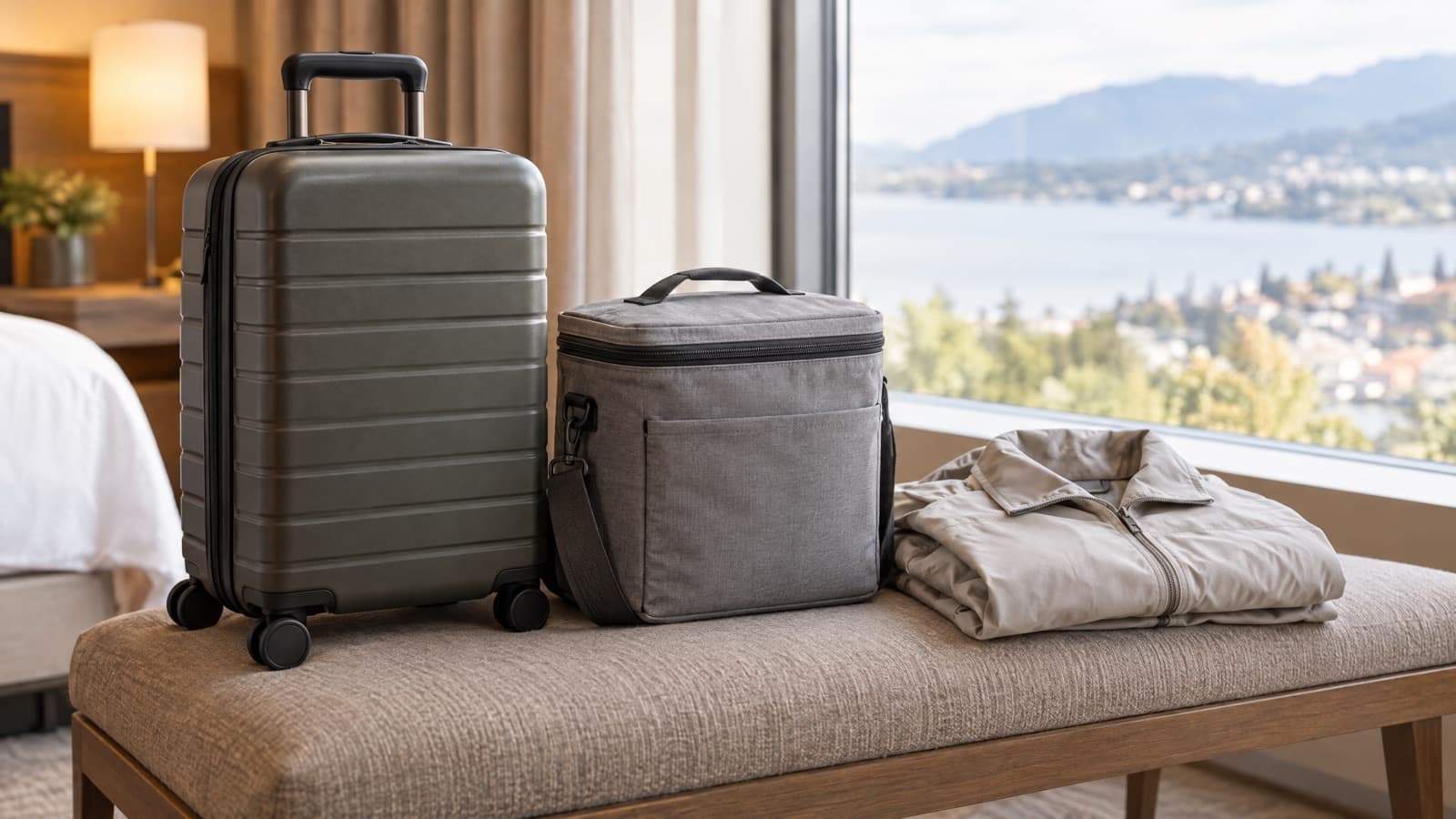
You can travel while taking tirzepatide or semaglutide, but plan ahead. Storage rules depend on your exact product and container, so start with your label, not a general rule.
For a compounded vial, follow your pharmacy label and beyond-use date. FDA also advises discarding multi-dose vials within 28 days after first use and using a new, sterile needle and syringe for each dose (FDA on unapproved GLP-1 drugs). Do not assume your medicine can safely stay at room temperature during a trip. Zepbound has presentation-specific limits, described below. For a compounded vial, ask your pharmacist.
At U.S. airports, TSA allows medically necessary gel ice packs in reasonable quantities, even if melted or slushy, but you must tell the officer (TSA gel ice packs).
Before any trip, call your pharmacist and your care team. The worksheets below help.
A simple packing checklist
- Medication in its labeled packaging
- Cold packs with a cloth barrierKeep cold packs from touching the medication directly.
- Supplies in their packaging
- A small sharps container
- Your pharmacy's contact details
Check the exact product before packing
Different products have different storage rules. Before packing, find:
- The product name (for example, Zepbound, Wegovy, or a compounded medicine from a pharmacy)
- The container type (pen, single-dose vial, or multi-dose vial)
- The beyond-use or expiration date
- The date you first used a multi-dose vial
If you use a compounded vial: Compounded medications are not FDA-approved. FDA does not review compounded medications for safety, effectiveness, or quality before marketing. Storage directions come from the pharmacy that made it. Follow your pharmacy label and ask the pharmacist how to keep the vial cold while traveling.
If you use Zepbound: The Zepbound prescribing information has specific room-temperature allowances for each Zepbound presentation (21 days for single-dose pens and vials; 30-day rules for the multi-dose vial and KwikPen, all not above 86°F). These apply only to Zepbound. They do not apply to compounded vials.
If you use Wegovy or another brand: Check that product's own package insert or ask your pharmacist.
Our storage guides explain these differences in more detail: tirzepatide storage and compounded semaglutide storage.
Plan cooling without freezing
Keeping medicine cold is important, but so is keeping it from freezing. The Zepbound label says not to use Zepbound if it has been frozen. For a compounded vial, if it freezes, do not use it and ask your pharmacist.
Practical tips to discuss with your pharmacist:
- Use an insulated medication bag with cold packs.
- Do not let the vial or pen touch a frozen pack directly. A cloth or a separate pouch between them can help. Ask your pharmacist what they recommend.
- Keep medicine with you. Do not leave it in a hot car, in direct sun, or in checked luggage you cannot control.
- Check your hotel fridge. Some hotel or mini fridges run very cold near the back or the freezer section. Ask your pharmacist how to store your product if you are unsure about the fridge.
- Plan for delays. Think about what you would do if a flight or drive takes much longer than planned.
If your medicine gets warm, freezes, or you are not sure how it was stored, do not decide based on how it looks. Call your pharmacist before using it.
Airport screening and supplies
For U.S. airports, TSA says:
- Medically necessary gel ice packs in reasonable quantities are allowed regardless of whether they are frozen, melted, or slushy. Tell the TSA officer so they can inspect them (TSA gel ice packs).
- Tell the officer you have medically necessary liquids or medications, and separate them from other belongings before screening (TSA special procedures).
- Also declare related accessories such as freezer packs and syringes (TSA special procedures).
- TSA recommends that medication be clearly labeled to help screening (TSA special procedures).
- If you prefer your liquid medicine not go through the X-ray, tell the officer. You will go through additional screening steps (TSA special procedures).
- The final decision rests with the TSA officer (TSA gel ice packs).
Rules change, so check the TSA website and your airline before each trip.
Keep the original label. Bring the medicine in its labeled pharmacy packaging. A copy of your prescription information can also help.
Bring enough supplies. Pack new needles and syringes for each planned dose, plus a few extras. FDA recommends carrying a small travel-size sharps disposal container (FDA sharps guidance).
Time zones and longer trips
Who should advise on schedule changes? Your care team. If you are crossing time zones or your injection day falls during travel, ask your clinician or pharmacist how to handle timing for your specific prescription. Do not create your own new schedule.
For context only, the Zepbound label says the day of weekly injection can be changed if doses are at least 72 hours (3 days) apart (Zepbound prescribing information). That is a Zepbound-specific rule. It is not a schedule for compounded products or other medicines.
For longer trips:
- Check your vial's first-use date. A multi-dose vial you opened before leaving may reach its 28-day limit while you are away.
- Ask whether you will need a refill during the trip and how it would be shipped.
- Ask your pharmacy how shipping to a temporary address works, if that is an option.
International rules and backup plans
TSA screening covers U.S. airport security only. It does not tell you whether you can bring a medicine into another country. Rules for importing medicine vary by destination. Before an international trip:
- Check the official rules for your destination country.
- Ask your clinician and pharmacist what documents you should carry.
- Ask your airline about carrying cold packs on board.
Backup plan: Know who to call if your medicine is lost, damaged, or gets warm. Save your pharmacy's phone number and your care team's contact information in your phone.
Printable packing checklist
- Medicine in original labeled pharmacy packaging
- Insulated medication bag and cold packs (with a barrier so medicine does not touch frozen packs)
- New needles and syringes for each dose, plus extras
- Travel-size sharps disposal container
- Alcohol swabs, if part of your routine
- Copy of prescription information
- Pharmacy phone number and care team contact information
- First-use date of any opened vial written down
- Notes from your pharmacist and clinician about timing and storage
- For international trips: destination medicine rules checked
Pharmacist call worksheet
Fill this in during your call before you leave.
My product and container: ________ Beyond-use or expiration date: ________ Date I first used this vial: ________
- How should I keep this medicine cold while traveling? ________
- What should I do if it gets warm or freezes? ________
- Will my vial reach its first-use limit during my trip? ________
- Can I get a refill during the trip, and how is it shipped? ________
- What documents should I carry? ________
- How should I time my dose while traveling? (Also ask your clinician.) ________
When to contact your care team or seek care
Contact your care team if you miss a dose, are unsure about timing, or used medicine that may have been stored incorrectly. While traveling, get urgent medical care for signs of a serious allergic reaction, such as swelling of the face, lips, tongue, or throat, or trouble breathing or swallowing. Also seek care for severe stomach pain that will not go away, or nausea, vomiting, or diarrhea that does not stop, since fluid loss can lead to dehydration (Zepbound Medication Guide).
For more on choosing a weekly routine, see best time to take tirzepatide. For general side effects, see our GLP-1 side effects guide.
Before you go
Review your travel plan with your pharmacist and clinician before departure.
References
This article is for general education and is not medical advice. Talk to a licensed provider about your individual situation.