
Nutrition
GLP-1 Breakfast Ideas for Different Appetites
Explore practical breakfast combinations and flexible swaps for smaller appetites, with protein, variety, and individual tolerance in mind.
By Toned Team · Reviewed by the Toned editorial team
Published October 19, 2026 · Last reviewed September 30, 2026 · 7 min read
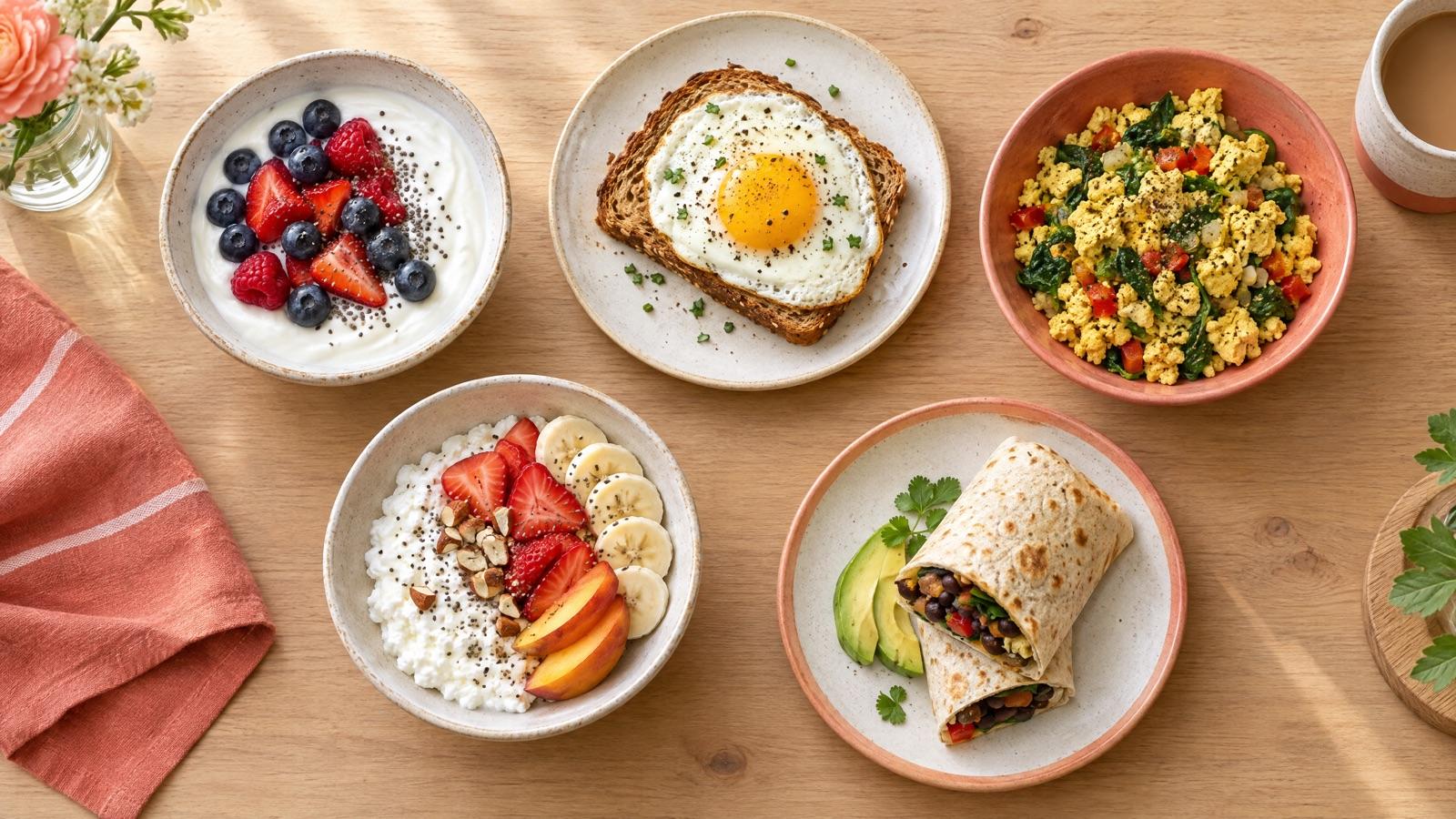
A good GLP-1 breakfast does not have to be big. A simple approach is to start with a protein food, add a fruit, vegetable, or whole grain if you can, and keep the portion to what feels comfortable. A 2025 joint nutrition advisory suggests eating protein-rich foods first and choosing lower-volume, nutrient-dense foods when appetite is reduced (joint nutrition advisory, 2025).
The ideas below are examples, not a meal plan. Adapt them to your tastes, culture, budget, allergies, and how you feel that morning, and check with your clinician or dietitian if you have a health condition that affects what you eat.
Build a flexible breakfast
Think of breakfast as three parts. Use one, two, or all three, depending on your appetite.
- A protein food (start here). Eggs, Greek yogurt, cottage cheese, milk or soy milk, tofu, beans, smoked fish, or leftover chicken.
- A fiber-rich food. Berries or other fruit, vegetables, oats, whole-grain bread, or beans.
- Something you enjoy. A little nut butter, seeds, cheese, salsa, herbs, or spices, if your stomach tolerates it.
Add a drink, such as water, milk, or tea. The advisory encourages adequate fluids and fiber from foods.
Five practical combinations
These are starting points. Mix and match.
- Yogurt bowl. Greek yogurt topped with berries and a sprinkle of seeds or oats.
- Egg and toast. Scrambled or boiled eggs with whole-grain toast and sliced tomato or cucumber.
- Savory tofu scramble. Crumbled tofu cooked with spinach, peppers, or leftover vegetables, seasoned to taste.
- Cottage cheese plate. Cottage cheese with fruit, or with cucumber, pepper, and herbs for a savory version.
- Bean breakfast wrap. Beans or refried beans, a little cheese or avocado, and salsa in a small whole-grain tortilla.
Breakfast swap matrix
Use this table to adjust any of the combinations above.
| Starting idea | Smaller appetite | Dairy-free | Vegetarian or vegan | Quick prep (under 5 minutes) |
|---|---|---|---|---|
| Yogurt bowl | A few spoonfuls of yogurt, eaten first, fruit later if you want it | Soy-based or other plant yogurt (check the label for protein) | Vegan: plant yogurt with seeds | Pre-portion yogurt cups and frozen berries |
| Egg and toast | One egg, half a slice of toast, or skip the toast | Already dairy-free if cooked without butter or milk | Vegetarian as is; vegan: use tofu scramble | Hard-boil a batch of eggs ahead of time |
| Tofu scramble | A few bites of tofu with one vegetable | Dairy-free as is | Vegan as is | Use pre-cut vegetables or leftovers |
| Cottage cheese plate | A small scoop with a few pieces of fruit | Swap for tofu, beans, or a plant yogurt | Vegetarian as is; vegan: use a plant-based option | Ready in a minute from the fridge |
| Bean wrap | Half a wrap, or beans in a small bowl | Skip the cheese, add avocado | Vegan if cheese is skipped | Use canned beans, rinsed, and a microwave |
| Any of the above | A protein drink sipped slowly | Use a dairy-free protein drink | Choose a plant-based protein drink | Keep shelf-stable drinks on hand |
Protein drinks, bars, and fortified foods can help on days when solid food feels like too much. The advisory notes that some people use them. They are optional, not required.
Options when your appetite is smaller
Do I need a large breakfast? No. A small breakfast, or even a delayed one, can be fine. What matters is getting enough nourishment across the day.
When you are not hungry in the morning, try:
- Eating a few bites of protein first, then stopping if you feel full
- Splitting breakfast into two mini-meals a couple of hours apart
- Choosing softer or cooler foods, like yogurt, if warm foods feel heavy
- Sipping a drink rather than eating if that feels easier
- Keeping portions small and having more later if you get hungry
If you can barely eat or drink most days, or you feel dizzy or weak, do not push through on your own. Contact your care team.
Adjust for dietary needs and tolerance
Can I use plant proteins? Yes. Tofu, tempeh, edamame, beans, lentils, soy milk, and plant yogurts can all be part of a breakfast. Check labels, since protein content varies a lot between plant products.
What if I cannot tolerate my usual foods? Taste and tolerance can change on GLP-1 treatment. The advisory notes that a smaller appetite and changes in how foods taste can make protein harder to reach. It also notes that foods high in fat or protein can slow stomach emptying further and may worsen constipation, so some people need to limit them for a while.
If a food that used to be fine now upsets your stomach:
- Try a lighter version, like a boiled egg instead of fried eggs and bacon
- Try a different protein, like yogurt instead of eggs
- Eat more slowly and stop when you feel full
- Note the pattern and share it with your care team
Other needs. If you have diabetes and take insulin or a sulfonylurea, ask your clinician how to plan meals, since eating less can affect blood sugar with these medicines. If you have kidney disease, food allergies, celiac disease, or a digestive condition, a registered dietitian can tailor these ideas to you.
How breakfast fits the rest of your day
Breakfast is one part of the day, not a test you pass or fail. Some people prefer a bigger lunch and a lighter morning. That can work too.
A few habits that help across the day:
- Include a protein food at most meals and snacks
- Add fruits, vegetables, beans, or whole grains where you can
- Sip fluids through the day
- Pay attention to fullness
For more, see our guides on how much protein you need on a GLP-1 and what to eat on tirzepatide, plus our GLP-1 meal prep checklist.
When to contact your care team or seek urgent care
Contact your care team if you have:
- Nausea, vomiting, or diarrhea that does not go away, or trouble keeping fluids down
- Trouble eating enough most days, or unplanned dizziness or weakness
- Signs of low blood sugar if you take insulin or a sulfonylurea, such as shakiness, sweating, or confusion
Seek urgent care for:
- Severe stomach pain that will not go away, with or without vomiting
- Swelling of your face, lips, tongue, or throat, or trouble breathing or swallowing
These warning signs come from the Zepbound Medication Guide. See our GLP-1 side effects guide for more.
A note for Toned.health patients
Toned.health offers compounded semaglutide and compounded tirzepatide, prescribed only if an independently licensed provider decides treatment is appropriate.
Compounded medications are not FDA-approved. FDA does not review compounded medications for safety, effectiveness, or quality before marketing.
Your next step
Adapt these examples with your clinician or dietitian, especially if you have diabetes, kidney disease, or a digestive condition.
References
- Joint nutrition advisory, 2025. PubMed Central
- Zepbound Medication Guide. Eli Lilly prescribing information
This article is for general education and is not medical advice. Talk to a licensed provider about your individual situation.