
Nutrition
GLP-1 Meal Prep Without a Rigid Diet
Make meal prep simpler with mix-and-match foods, smaller portions, and a flexible grocery checklist for your GLP-1 care routine.
By Toned Team · Reviewed by the Toned editorial team
Published October 21, 2026 · Last reviewed September 30, 2026 · 8 min read
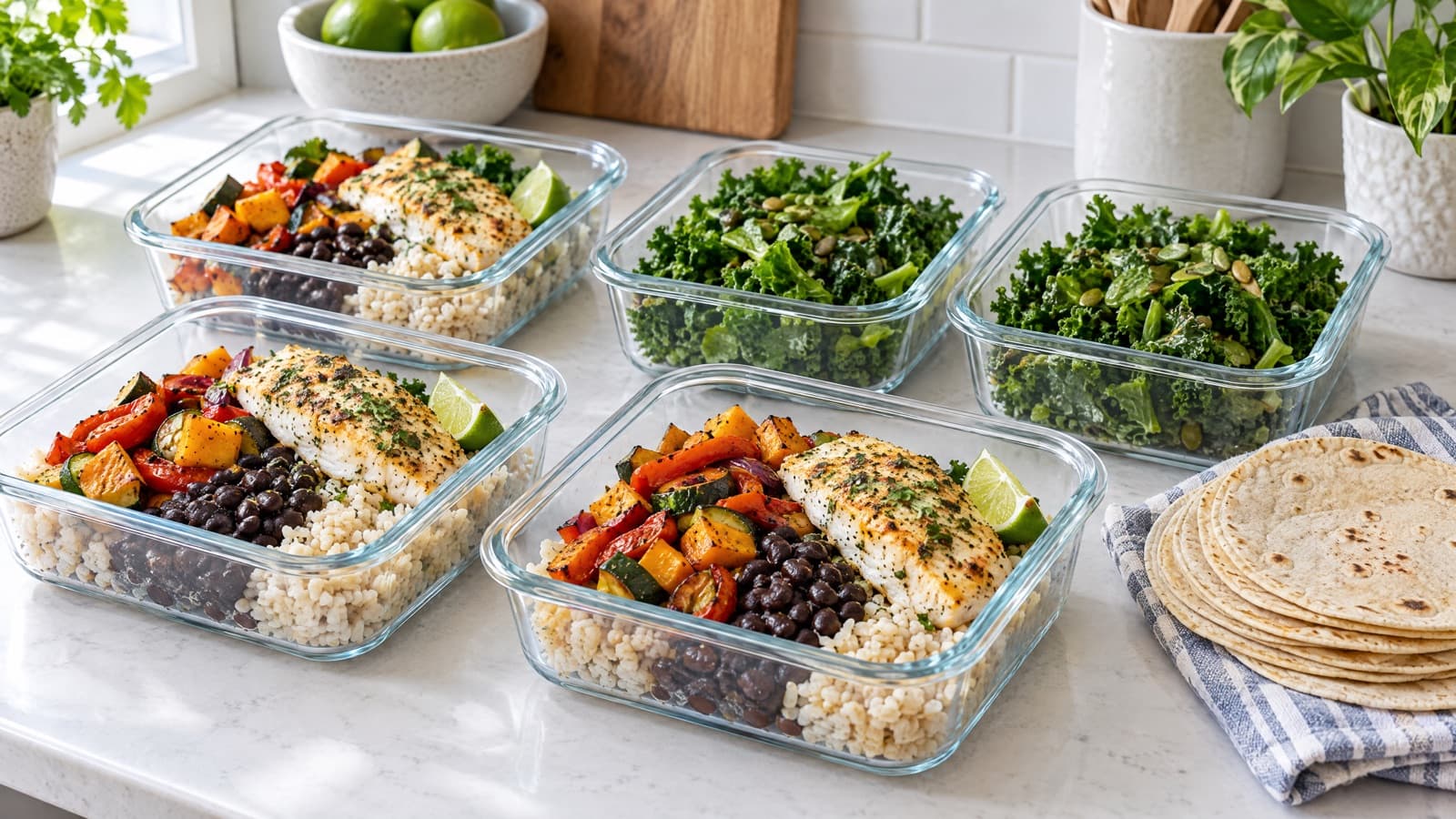
There is no single "GLP-1 diet" you have to follow. Meal prep on a GLP-1 medication works best as a planning habit, not a strict menu. The goal is to keep a few ready-to-use foods on hand so that eating something nourishing is easy, even when your appetite is smaller or changes from day to day.
A practical approach: prep a handful of protein, produce, and carbohydrate "building blocks," store them in small containers, and mix them into meals that fit your tastes, culture, budget, and household. Expert groups have noted that protein, fiber-rich foods, and fluids deserve attention during GLP-1 treatment, while the right amounts depend on the person (joint nutrition advisory on GLP-1 therapy).
This article is about logistics: what to prep, how to pack it, and how to adjust. It does not set calorie, macro, or portion targets. Your clinician or a registered dietitian can help with those.
Must you follow a special GLP-1 diet?
No universal menu is required. A 2025 joint advisory from four obesity and nutrition organizations focused on nutrition priorities rather than one fixed plan. It recommended nutrition assessment and counseling before, during, and after weight reduction, and it encouraged enough protein, fluids, and fiber from foods (joint advisory).
That leaves a lot of room for your own food traditions. Rice and beans, lentil soup, tofu stir-fry, grilled fish, eggs and tortillas, or a chicken and vegetable stew can all fit. Meal prep simply makes those choices easier to reach for.
For the "why" behind these food choices, see our nutrition guide, what to eat on tirzepatide. For protein specifically, see why protein matters on a GLP-1.
Choose flexible meal components
Instead of cooking five identical meals, prep components you can combine in different ways. Pick one or two from each group below. Swap freely based on allergies, religious or cultural practices, and what your household already eats.
| Building block | Example options (choose what fits you) | Prep idea |
|---|---|---|
| Protein | Eggs, chicken, turkey, fish, tofu, tempeh, beans, lentils, Greek yogurt, cottage cheese, edamame | Cook a batch, or keep ready-to-eat options on hand |
| Vegetables | Roasted carrots, peppers, zucchini, greens, cucumbers, tomatoes, frozen mixed vegetables | Wash and chop once; roast a tray |
| Fruit | Berries, apples, oranges, bananas, frozen fruit | Pre-wash, portion into small containers |
| Carbohydrates and grains | Rice, quinoa, oats, potatoes, whole-grain bread, tortillas, noodles | Cook one batch to use across meals |
| Flavor | Salsa, herbs, lemon, spices, a sauce you enjoy | Keep separate so meals do not taste the same |
Dietary needs vary. Dairy-free, vegetarian, vegan, halal, kosher, gluten-free, and low-sodium versions of almost every row are possible. If you have a food allergy, a kidney condition, diabetes, or a digestive condition, ask your clinician or a registered dietitian before making big changes.
Prep protein, produce, and carbohydrate options
A simple weekly rhythm:
- Pick two proteins. One cooked (for example, baked chicken or seasoned lentils) and one no-cook (for example, yogurt, eggs you hard-boil, or canned beans).
- Prep two or three vegetables. One roasted, one raw, and one frozen bag for backup.
- Cook one grain or starch. Rice, potatoes, or a pot of oats.
- Make one sauce or flavor. This keeps repeated foods interesting.
The advisory notes that some people find protein harder to reach when appetite is lower, and that eating protein-rich foods first in a meal is one approach some people use (joint advisory). It also notes that foods high in protein or fat can slow digestion further and may worsen constipation for some people. That is one more reason to adjust to how you actually feel rather than follow a fixed rule.
Pack adjustable portions
Many people on GLP-1 medication find that their usual plate feels too big. Small containers help.
- Use smaller containers. It is easier to open a second small container than to throw away half of a large one.
- Pack "mini meals." A few bites of protein, a vegetable, and a small starch can stand alone or pair with another mini meal.
- Keep sauces separate. This helps leftovers stay appealing.
- Label containers with the date you cooked them. This makes food safety easier (see below).
Keep prepped food safe
Meal prep only helps if the food stays safe to eat. These are general food-safety rules from U.S. government food-safety agencies, not medical advice:
- Refrigerate cooked food within 2 hours, or within 1 hour if it is above 90°F, such as at a summer picnic (USDA FSIS leftovers guidance).
- Divide large batches into shallow containers so they cool faster (USDA FSIS).
- USDA says leftovers can be kept in the refrigerator for 3 to 4 days or frozen for 3 to 4 months (USDA FSIS). If you prep on Sunday, plan to freeze anything you will not eat by about midweek.
- Keep your refrigerator at 40°F (4°C) or below and your freezer at 0°F (-18°C) or below (FoodSafety.gov).
- Reheat leftovers to 165°F, checked with a food thermometer (USDA FSIS).
Plan for appetite variation
Your appetite may not be the same every day. Building flexibility into your prep means less waste and less stress.
- Have a "low-appetite" shelf. Yogurt, soup, a smoothie, cottage cheese, or a soft egg dish can be easier on some days.
- Freeze half of a batch. If you eat less than you planned, the freezer keeps the rest from going to waste.
- Keep fluids easy to reach. The advisory encourages adequate fluids (joint advisory). A filled water bottle in the fridge is a small prep step.
- Do not force large meals. Eating very little for many days, or not being able to keep food or fluids down, is a reason to contact your care team, not something to push through.
How can meals fit a household?
You do not need to cook separately. Prep the shared components for everyone, then let each person build their own plate. Family members may take larger portions or add extra sides, while you pack a smaller container. Taco nights, grain bowls, and soup-and-sandwich dinners all work well this way.
What can I prepare when time is limited?
Short on time? Lean on foods that need little or no cooking:
- Rotisserie or pre-cooked chicken, canned fish, or canned beans
- Pre-washed salad greens or frozen vegetables
- Microwavable rice or frozen grains
- Yogurt, cottage cheese, or eggs
- Fruit that does not need cutting
Even one 20-minute session (cook a grain, roast one tray of vegetables, and portion a protein) can cover several meals.
Example: a three-day mix-and-match plan
This is an example only, not a personalized meal plan. It shows how the same few components can become different meals. Portions are not listed on purpose: eat the amount that is right for you and discuss targets with your care team.
| Day 1 | Day 2 | Day 3 | |
|---|---|---|---|
| Morning | Greek yogurt with berries | Eggs with sautéed greens and a tortilla | Oats with fruit (or a dairy-free yogurt) |
| Midday | Rice bowl with chicken or tofu, roasted vegetables, salsa | Lentil soup with a side of raw vegetables | Wrap with leftover chicken or beans and greens |
| Evening | Fish or tempeh with potatoes and green beans | Leftover rice bowl, new sauce | Small portion of soup plus a side of fruit |
| Low-appetite backup | Cottage cheese or a smoothie | Yogurt cup | Half portion of soup |
A sample shopping and prep worksheet
Print or copy this and fill it in each week.
My proteins this week: 1. ________ 2. ________ My vegetables: roasted ________ raw ________ frozen backup ________ My grain or starch: ________ My flavor or sauce: ________ Low-appetite backup foods: ________ Foods I need to avoid or adjust (allergies, cultural, medical): ________ Prep day and time: ________ Container check: small containers ___ labels or tape for dates ___ Freeze by (date): ________ Questions for my clinician or dietitian: ________
When to contact your care team
Food prep cannot fix every symptom. Contact your care team if you have nausea, vomiting, or diarrhea that does not go away, because losing fluids can lead to dehydration and kidney problems (Zepbound Medication Guide). Seek urgent care for severe stomach pain that will not go away, or signs of a serious allergic reaction such as swelling of the face, lips, tongue, or throat, or trouble breathing or swallowing (Zepbound Medication Guide). For a broader overview, see our GLP-1 side effects guide.
Bring this worksheet to your next check-in
Use this worksheet to discuss a manageable nutrition routine with your clinician or a registered dietitian.
References
- Joint nutrition advisory on GLP-1 therapy. PubMed Central
- USDA FSIS leftovers guidance. fsis.usda.gov
- FoodSafety.gov. foodsafety.gov
- Zepbound Medication Guide. NIH
This article is for general education and is not medical advice. Talk to a licensed provider about your individual situation.